
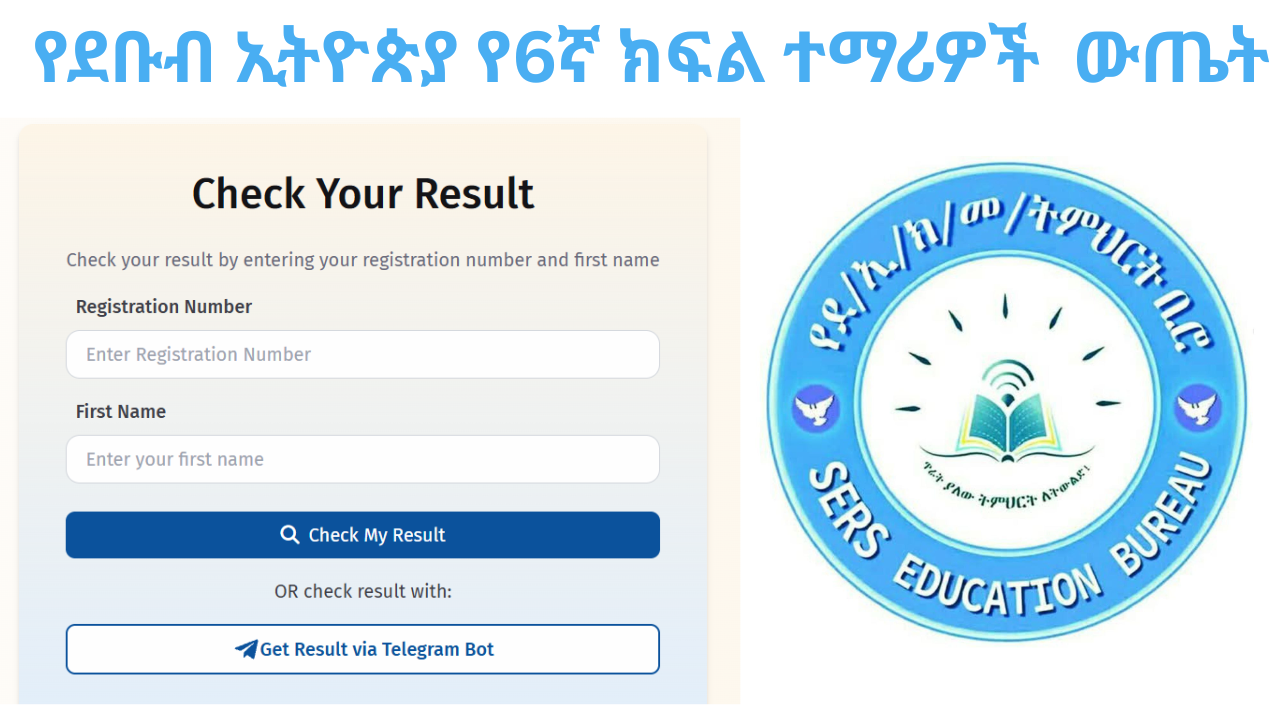
South Ethiopia Grade 6 Result 2017 se.ministry.et
Southern Ethiopia, 2017 — The Southern Ethiopia Regional Education Bureau has released the official results of the 2017 Grade 6 regional examination, marking a historic milestone as this was the first time the Grade 6 exam has been administered in the region.
According to Tsehai Warasa, Head of the Bureau, the cut-off score requirements for student promotion have been set as follows:
- Regular students: 50 points and above
- Pastoralist students: 48 points and above
- Special needs students: 45 points and above
Exam Participation and Pass Rate
In 2017, a total of 109,179 students from across Southern Ethiopia participated in the Grade 6 regional examination. Out of these, 61,930 students successfully met the required cut-off scores and advanced to the next grade, resulting in a pass rate of 56.7%.
While more than half of the students passed, nearly 47,000 did not meet the threshold — a result that underscores the need for continued educational support and investment, especially in rural and underserved areas.
Why This Year Was Historic
The administration of the Grade 6 regional exam in 2017 represented a significant change in Ethiopia’s education system. Previously, such standardized exams were typically taken in Grade 8. The decision to introduce the Grade 6 assessment aims to:
- Identify learning gaps earlier in the education cycle.
- Provide students with more targeted support before secondary school.
- Monitor the quality of education in primary schools across the region.
Cut-off Scores and Equity in Education
The Bureau’s decision to set different cut-off points for regular, pastoralist, and special needs students reflects a broader commitment to equity in education:
- Regular Students (50+ points): The standard benchmark for most students.
- Pastoralist Students (48+ points): Recognizing the unique challenges faced by pastoralist communities, where mobility and access to resources can impact learning.
- Special Needs Students (45+ points): Ensuring inclusivity by accommodating the different learning needs of students with disabilities.
Challenges Revealed by the Results
The results shed light on several ongoing challenges in the region’s education system:
- Infrastructure Gaps: Many schools in rural districts lack adequate classrooms, libraries, and laboratory facilities.
- Teacher Shortages: Limited access to qualified educators in remote areas continues to affect student performance.
- Economic Pressures: Children from low-income households may miss classes due to work responsibilities.
- Language Barriers: Ethiopia’s linguistic diversity sometimes creates learning difficulties when the language of instruction differs from a student’s mother tongue.
South Ethiopia Regional State Office of the President – Supporting Education Through Reform
The South Ethiopia Regional State Office of the President, led by Tilahun Kebede, is currently undergoing significant restructuring to improve service delivery across all sectors, including education. These reforms focus on:
- Streamlining structure and systems.
- Increasing efficiency and effectiveness in public services.
- Fostering accountability and transparency.
According to the Office, stakeholder input is encouraged to ensure community-wide engagement and acceptance of these reforms. The leadership emphasizes that progress in education is inseparable from broader governance and development efforts.
Tilahun Kebede’s administration has also stressed the importance of unity, peace, and respect among citizens. “Our people are law-abiding, peace-loving, and zealous for unity,” he stated. “Acts that provoke hatred, spread division, or promote false information should be completely excluded from our community.”
Educational Results and Community Values
The Grade 6 results are not just academic statistics; they reflect the broader values of the South Ethiopia Regional State. Leaders have called upon intellectuals, artists, and media professionals to contribute positively to the community by fostering knowledge, integrity, and togetherness.
This spirit is summed up in the leadership’s vision of “We Are Strong as a Team”:
“Creating strong bonds with others is a crucial aspect of building meaningful relationships. We achieve this through respect, active listening, and tolerance. By embracing diversity and valuing each person’s perspective, we can develop strong, lasting bonds that enrich our lives and create a more compassionate world.”
By aligning these social values with educational progress, the region aims to cultivate not only knowledgeable students but also responsible, empathetic citizens.
How to Check the South Ethiopia Grade 6 Result 2017
The results are available online through the official government portal:
- Website: se.ministry.et
- Steps to check:
- Visit the official results page.
- Enter your Grade 6 exam registration number.
- Select “Grade 6 Results.”
- View or download your result slip.
For students without internet access, results can also be obtained from local schools or woreda (district) education offices.

Looking Forward
With the first-ever Grade 6 regional examination now completed, the Southern Ethiopia Regional Education Bureau has a valuable baseline for future improvements. The results will guide policymaking, teacher training programs, and resource allocation in the coming years.
Coupled with the governance reforms spearheaded by the Office of the President, these educational initiatives aim to build a stronger, more united South Ethiopia — where every student has the opportunity to thrive.
